

Your Car Has Run-Flat Tires. Why Doesn't Your E-Bike?
Run-flat tires have been standard in cars for decades. The concept is simple: when a tire loses pressure, you keep driving safely to the nearest service point. Nobody questions it. So why are e-bike riders still getting stranded roadside by a flat?
Consider what an e-bike actually is: a machine weighing up to 25 kg, travelling at 25+ km/h through urban traffic or along remote trails. A flat on that bike is not the same event as a flat on a lightweight road bicycle. It is a system failure that compromises handling, risks rim damage, and can genuinely endanger the rider.
This article breaks down what run-flat capability means in the cycling context, why e-bikes need it more urgently than any other bike category, and how Tannus Armour delivers it today.
Why E-Bike Flats Are a Different Beast Entirely
Start with the physics. According to Velotric, e-bikes weigh on average 20 to 28 kg (44 to 62 lbs), roughly twice the weight of a standard bicycle at 10 to 15 kg. The extra mass comes from the motor, battery, and reinforced frame, and every gram of it presses down on two tires.
Layer on speed and torque. E-bikes routinely cruise at 25 km/h or more, and the motor delivers constant torque to the drivetrain. This triple threat of weight, speed, and torque dramatically increases puncture risk, pinch flat frequency, and accelerated tire wear compared to regular bikes.
Higher speeds combined with heavier loads also amplify friction heat on the tread. As Cyrusher Sports explains, this heat accelerates wear and increases vulnerability to punctures over time. Rear tires, which bear the brunt of motor torque and rider weight, wear 20 to 30% faster than front tires.
Then there is the rim damage problem. Macfox Bike notes that because of the heavier weight, riding even briefly on a flat e-bike tire can quickly cause a bent rim or torn tire. What starts as a small puncture escalates into a far more expensive repair.
E-bike tires also naturally lose 1 to 2 PSI per week, according to Letrigo. On a heavy e-bike, even slightly low pressure dramatically increases pinch flat risk. A sudden flat at 25+ km/h on a 25 kg bike creates handling instability that is genuinely dangerous, especially in urban traffic.
The Hub Motor Problem: Why Fixing an E-Bike Flat Is So Much Harder
Here is a complication most riders do not think about until they are standing on the side of the road. Pedal-assist e-bikes command 78.9% of the global e-bike market share, and the majority of these models use a rear hub motor.
Removing the rear wheel on a hub motor e-bike is not like removing a regular bicycle wheel. You have to disconnect motor cables before the wheel can come off, a process that requires tools, knowledge, and patience that are rarely available mid-commute, on a delivery route, or miles from the trailhead.
This matters even more when you consider who is riding e-bikes. Older and less mechanically confident riders represent the fastest-growing e-bike demographic. They are the least likely to manage a roadside repair and the most likely to be stranded by one. For this rider profile, passive, built-in run-flat protection is not a luxury. It is the only practical solution.
What 'Run-Flat Capability' Actually Means for Cyclists
Let's define the term clearly. In the cycling context, run-flat capability means the ability to continue riding safely for a limited distance after a tire loses air pressure, without damaging the rim. Borrowed directly from automotive technology, it solves the same problem: keeping you moving when the air is gone.
Two separate benefits often get confused. Puncture prevention stops the flat from happening in the first place. Run-flat capability lets you continue riding safely after a flat occurs. They are complementary, but they are not the same thing.
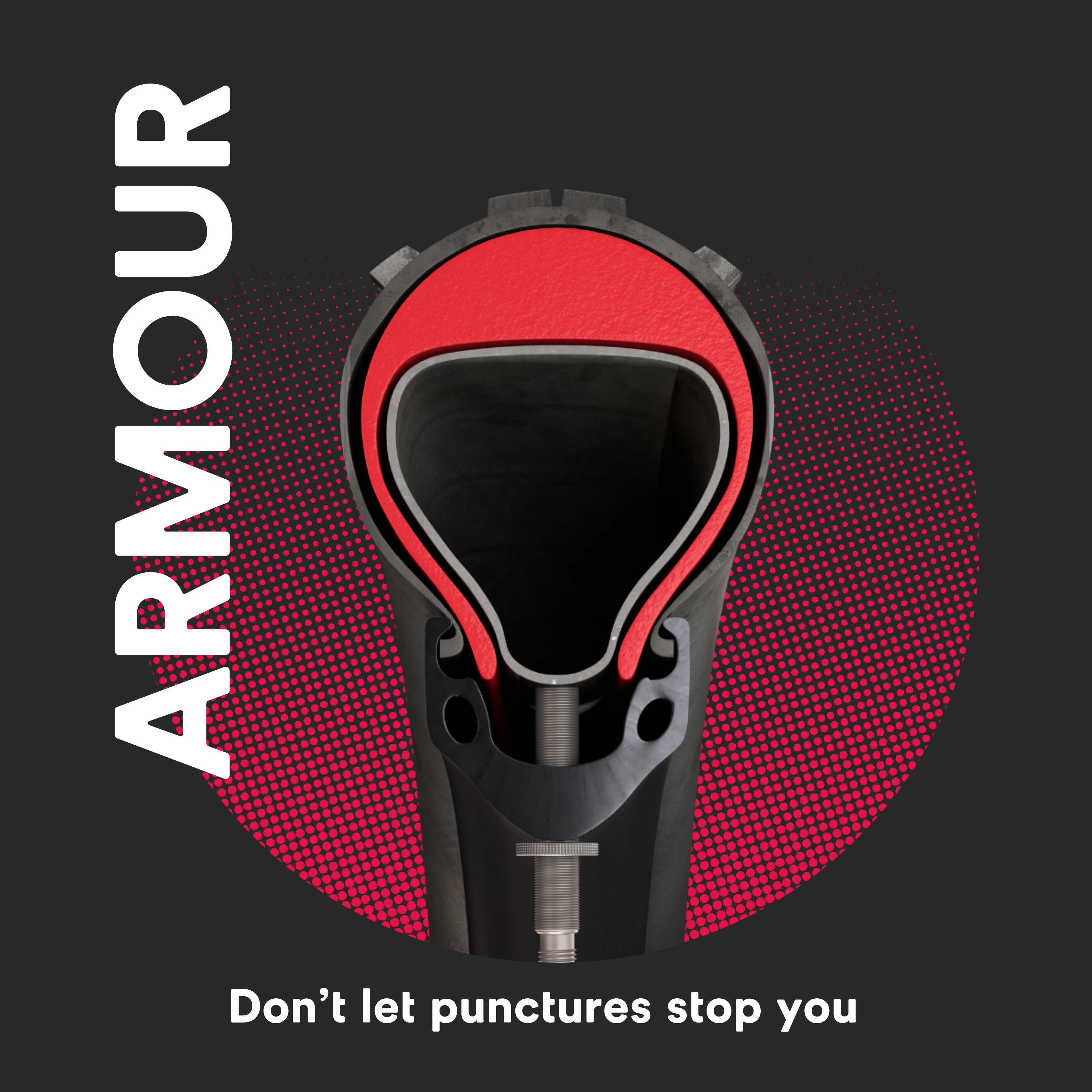
Tannus Armour delivers both. Its 15mm puncture shield prevents the vast majority of flats before they happen. Its Aither 1.1 micro-cell polymer foam structure supports the tire even when air pressure is completely lost, enabling true run-flat capability.
In practice, this means you can continue riding for a few miles after a flat, reach a safe location, and avoid rim damage. You are not stranded. You are not risking a crash. You are riding to your destination or to the nearest repair point.
For riders on tubeless setups, Tannus Tubeless Inserts provide the same run-flat capability. Whether you run tubes or tubeless, the safety benefit is identical: you keep riding.
How Tannus Armour Delivers Run-Flat Capability on E-Bikes
Tannus Armour is a foam tire liner that sits inside the tire between the tube and the casing. At its thickest point, it provides up to 15mm of puncture shielding and wraps nearly 360° around the tube, creating a substantial barrier between the road and your inner tube.
The technology behind it is what makes the difference. Aither 1.1 is a patented micro-cell polymer foam compound developed over 15+ years of dedicated R&D, backed by internationally recognised patents for safety and performance. Critically, the foam maintains its structural integrity even when the tire is completely deflated. That structural support is what enables genuine run-flat capability.
Compatibility is straightforward. Tannus Armour works with standard inner tube setups and requires no tubeless conversion, making it immediately accessible to the vast majority of e-bike riders. It provides run-flat capability across regular tire sizes (fat tire sizes are excluded, so check your setup before purchasing).
The real-world results speak for themselves. In a 3,000-mile cross-country case study, Tannus Armour eliminated 90% of punctures. Over 1,000,000 cyclists worldwide are now riding puncture-free with Tannus products. That is not a marketing claim. That is a million riders who stopped worrying about flats.
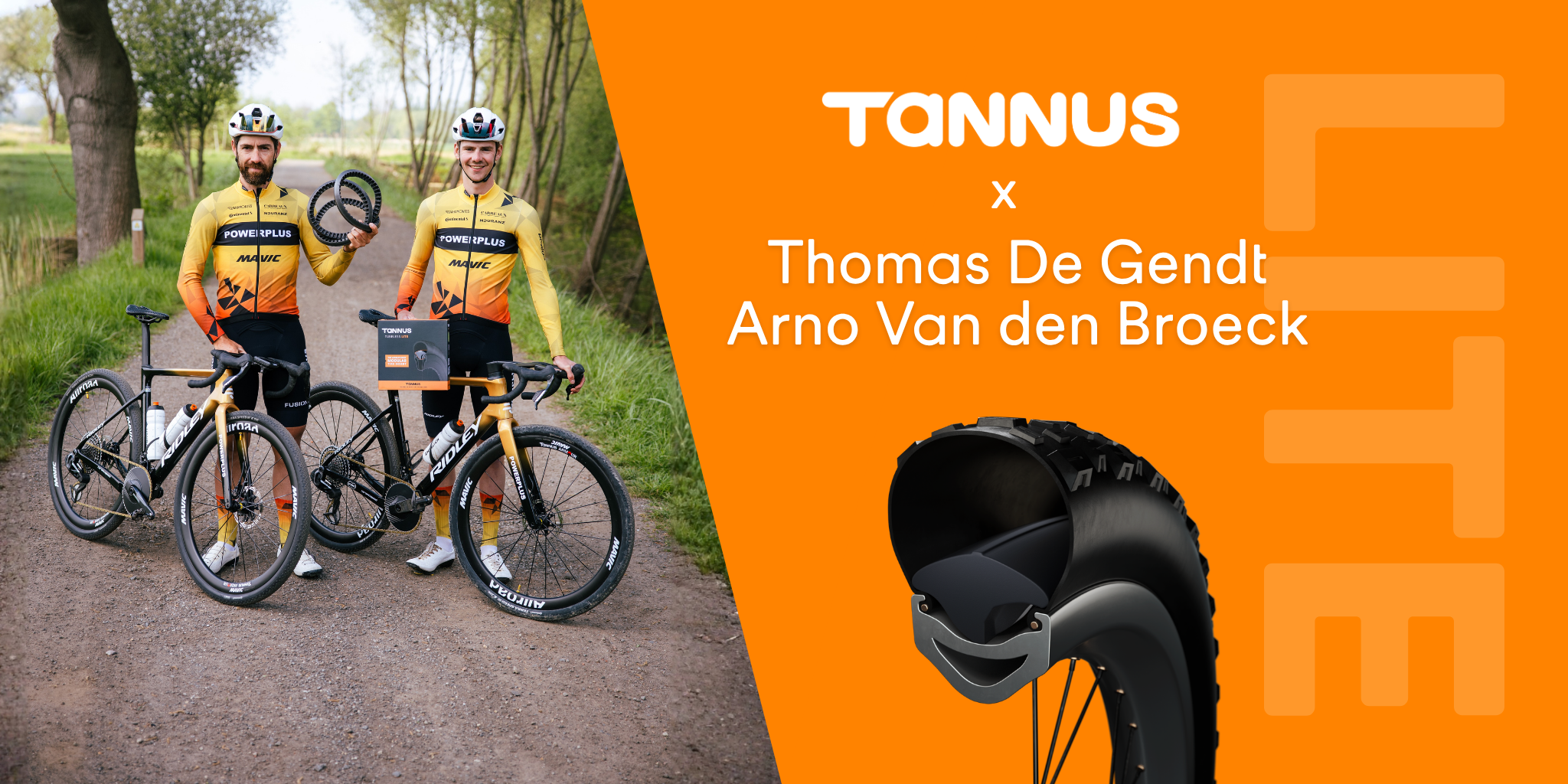
For tubeless e-bike riders, Tannus Tubeless Inserts deliver equivalent run-flat protection. Their performance credentials are serious: three of the top five finishers at Unbound Gravel 2025 used Tannus Tubeless Inserts. When elite gravel racers trust your insert at the hardest events on the calendar, the technology speaks for itself.
The Commuter, the Cargo Rider, and the Trail Explorer: Who Needs This Most
Picture three riders. The urban commuter weaving through morning traffic who cannot safely stop to fix a flat. The cargo delivery rider whose livelihood depends on completing every route, every day. The trail explorer, miles from the trailhead, with no cell service and no bike shop in sight.
For all three, run-flat capability is not a performance perk. It is a safety and reliability essential. With the global e-bike market valued at €48.2 billion in 2025 and projected to reach €77.6 billion by 2032 according to MarketsandMarkets, the number of riders facing these scenarios is growing fast.
Many of these riders are older or less mechanically confident. Passive protection built into the tire setup means they never have to manage a roadside repair. There is a sustainability angle worth noting too: fewer tube replacements mean less rubber waste, aligning with the eco-conscious values that draw many riders to e-bikes in the first place.
Just Ride. Never Get Stranded.
E-bikes are heavier, faster, and harder to repair roadside than regular bikes. A flat tire on an e-bike is not a minor inconvenience. It is a safety risk, a potential rim-destroying event, and for many riders, a stranding event with no easy fix.
Run-flat capability changes the equation entirely. Tannus Armour prevents most flats from happening and ensures you can ride safely to your destination if one does occur. That is the dual benefit no other solution delivers as simply or as reliably.
Explore Tannus Armour for tube setups or Tannus Tubeless Inserts for tubeless configurations. Fit them once, and stop worrying about flats. With Tannus, a flat tire is no longer a reason to stop riding. Just ride.
Sources
- Velotric – How Much Does an E-Bike Weigh
- Cyrusher Sports – Can Fat Tire E-Bikes Reduce Flat Tires
- Macfox Bike – Can You Ride an eBike With a Flat Tire?
- Letrigo – Electric Bike Flat Tire Repair & Prevention Guide
- Mordor Intelligence – E-Bike Market Size, Share & Industry Trends
- Tannus America – Tannus Armour Product Page
- Tannus America – Common Causes of Bike Tire Punctures & How to Prevent Them
- Tannus America – The No-B.S. Guide to Tire Inserts for Mountain & Gravel Bikes
- MarketsandMarkets – E-Bike Market Worth $87.15 Billion by 2032


Leave a comment
This site is protected by hCaptcha and the hCaptcha Privacy Policy and Terms of Service apply.